

The article shared by Jason Acidre, a famous SEO expert in the Filipino industry, is highly appreciated by the community and experts.
I myself have followed and learned a lot of useful knowledge from him, if you really want to become an SEO Expert, this is an article for you, there will be a lot of useful knowledge that Jason Share and share from top experts, start exploring:
Become an SEO expert.
Expanding business scale
Providing SEO services even to this day is still an attractive industry.
The SEO industry is estimated to be worth $ 79 billion by 2020, according to last year’s SEL report.
Whether you choose to become an independent SEO consultant or start and run your own SEO company – the potential is huge. I can testify to that.
But SEO is not for the faint of heart. The only thing standing in this business is change.
To be competitive, you need a solid foundation on how SEO really works.
Starting your own SEO or agency business is easy – but getting it to work is not easy. Trust me! For many years working in this field, I realized that SEO is for people who are really competitive.
It is for those who are truly ready for never ending challenges. Given that it is difficult to expand any service-based business model.
I like the typical issues that Nathan Gotch lists that most consultants or owners will encounter when running an SEO business for their clients:
- Expectations are not realistic. This is usually the product of a weak client or test system. If you do not set realistic expectations, you will regret it. Do not overstate what is possible to meet your sales quota.
- Customers may be unreliable and may hurt your cash flow. It doesn’t matter how good your collection system is. There will be customers who play games when paying.
- Operation is a problem that always stick in your head. Running an SEO agency is a challenge because every campaign is unique. That means each campaign requires different actions. This makes it hard to create solid systems, thus making scaling difficult.
- Requirement of human capital. To expand an SEO agency, you need to hire people. You can only go by yourself. New challenges arise when you include employees, but that will be the subject of a blog post later.
- It is a job with many employers. Working with customers often feels like a job and not a business. Of course, you can overcome this by taking yourself out of the hassle. But better said than done.
You need to be really passionate to achieve the last thing. I am not writing this article to bother you when engaging in this area. But it is better to know what you really get before you start.
Why should you listen to me?
I may not stay in the business long enough. I have started doing SEO since 2010 and have been really passionate about it ever since.
But I think one thing that qualifies me to write about this is the progress of my SEO journey:
- I am an internal SEO for Affilorama, Traffic Travis and SaleHoo in 2010 – 2011.
- I am a freelance SEO consultant (so far), starting when I started this blog back in June 2010.
- I co-founded an SEO company (specializing in link building) and have been operating for 6 years.
- And this year, I partnered with industry veterans to build a new SEO outsourcing service provider.
In short, a freelance worker and a guy working in the office. Being all of these taught me a lot about business.
Now we can move on to more important aspects to starting your own SEO business.
Core SEO principles and strategies
When starting a business, most professionals will recommend starting with a detailed business plan. Although, personally, I think it is best to first outline the core principles of your business.
With our industry, it means having your own core SEO strategy to follow. This is important, as this is where your processes revolve around (as well as your pricing models).
Many SEO consultants have different views and principles when it comes to effective and ROI-based SEO.
And quite enough, these guiding principles are mainly based on their experience.
Some say content is the most important, while some may believe that technical SEO can win it all, and a few consider backlink link building as the ultimate factor.
You need to know where you are.
In my case, I always believe it is a combination of all the most important factors:
- SEO Technical: A well optimized website (for both site and page level fixes).
- Having solid content assets that can:
o Ranking for search queries that are important to customers’ businesses
o Consistent with the purpose of the target audience / user
o Set an example of brand expertise
o Attract or earn links
o Encourage website conversion
o Build loyalty
- Linking a site’s brand with other authorized entities in its space through link opportunities based on relationships and other forms of content cooperation.
Your core SEO strategy can be as complex as you want, or as simple as:
- Identify the keywords that your customers want to rank (evaluate whether it’s feasible in the next 12 months. If not, look for other opportunities).
- Build the best content on the keywords they want to rank (Skyscraper house type).
- Promote and build links to these content assets.
It is important to have your own roadmap to victory.
But also note that each business or client you encounter will have its own unique business situation and SEO needs.
SEO strategy is not a service for all. What works well for a real estate website is unlikely to work well with a stylish ecommerce website.
That is why mastering the best SEO platform practices is so important in maintaining an SEO consulting business.
Read suggestions (if you are new to SEO):
- SeoTheTop’s 9-day web SEO guide
- Moz’s beginner’s guide to Search Engine Optimization
- A step-by-step guide to SEO – by Neil Patel
- Google search engine optimization guide
Your process is your Product
Once you’ve refined your own core principles (SEO strategy), it’s easier to identify the set of tasks you’ll need to build surrounding processes.
It is best to determine what type of service you will focus on as an SEO consultant or outsourced job provider.


There are many types of SEO services and as you grow, providing all of them will be an operational nightmare (unless you have the necessary processes for each type in place).
And one of the best things about SEO is that there are a number of tools that can help you create processes for every major area of practice.
I recall when I first started in 2010 (as a freelance consultant) – I didn’t use any paid tools.
Seriously, you can do a lot with GWT (currently Search Console), Analytics, MozBar and ScreamingFrog (free accounts). And until now, I still prefer to use these free SEO tools most of the time.
These tools are enough for you to get started. Although, there are a few paid tools in your sleeve that can take your business further.
Create SEO Checklist
You need to create your own SEO Checklist (for all the types of services you will provide) to run an SEO consulting business effectively.
Here are some existing audit frameworks that you can adjust and improve on the go (and move on to the SEO that you’ll eventually hire).
Technical SEO:
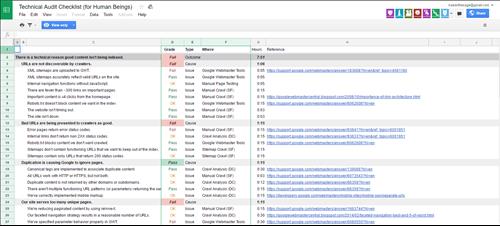
Technical Audit Checklist for human implementation – by Distille

Local SEO checklist:
- LocalSEOChecklist.org
- Local SEO checklist (for all types of businesses)
- Moz’s local 2017 search ranking factors
- Top local citations by business directory – BrightLocal
E-commerce SEO checklist:
- BigC E-commerce SEO checklist and checklist
- The definitive guide of Backlinko e-commerce SEO
International SEO Checklist:
- Aleyda Solis international SEO Checklist
- International SEO: Martin Kura’s 56-point checklists
Keyword research process:
Significant keyword research is the backbone of an SEO campaign.
Here are some of the most extensive tutorials on topics you can use to create your own process.
- How to do keyword research by Nick Eubanks
- Keyword research for SEO by Brian Dean
- Basic Yoast Keyword Research guide
Analysis and recovery of Google penalties:
Google Analytics organic traffic data and Moz’s Google Alteration Change History list are sufficient to help you diagnose whether the site you have been working on has been updated with algorithms in the past.
Simply cross-reference the date (s) on which the site has significantly reduced search traffic with publicly endorsed updates by Google. This will help you identify aspects to focus your audit (if it’s a content or link quality issue).
In the case of manual penalties, you can see this warning through Google Search Console.
I have written some guidelines on how to recover from such punishments in the past:
- SEO for penalized sites
- How to recover from Panda
- How to recover from Penguin
- SEO Hummingbird (hummingbird)
The process of creating content
Content is what drives successful digital marketing campaigns (because of successful digital marketing campaigns.
This is one of the 3 most important ranking factors in SEO, so it is imperative to have a replicable process for creating content.
Useful guides on content creation:
- Content creation and testing process Content 10x
- The most complete Content optimization guide
Build processes based on tools
Another way to make your business more economical (in terms of time, effort and labor) is by becoming more proficient with the tools with which you can build processes.
Investing in paid tools (and the knowledge to use them effectively) can help you get things done faster, which is always a good thing, especially when you’re in it for a long time.
Use Google Search Console for technical SEO (Free)
I wrote an extended guide a few years ago on how to conduct thorough on-site technical audits using only the Search Console.
Assess the site’s crawl budget
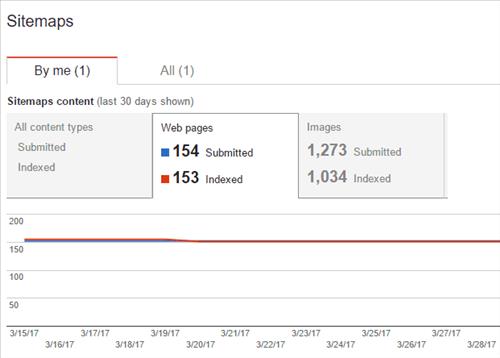
Ensure that all important pages of the site (the pages that your customers want to rank) are crawled regularly.
Compare the number of pages submitted via an XML sitemap to the number of pages indexed.

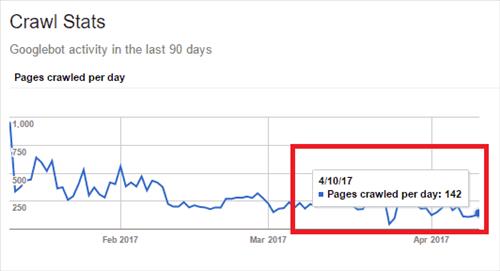
Then check the average number of pages that is collected on the site each day (Crawl> Crawl Statistics).

Fetch as Google
To see how Google’s crawler sees your site compared to how visitors view it (for both desktop and handheld):
In it you can see which resources cannot access Googlebots.
Improved HTML
Where you can easily see if a site has an internal duplicate issue with their meta data.
URL parameter
Finds URL parameters that can cause internal duplication and fills # indexable content pages of web pages.
And there are other features in which the tool can give you lots of insights from:
- Structured data and Rich tags
- Structured data checking tool
- Reports on mobile usability and accelerated mobile sites
- Search Analytics (offering much superior keyword performance data)
- Details of page speed
- Error data collection
Premium site audit SEO with OnPage.org (paid)
Onpage.org can seriously make the SEO reports on your site very competitive.
The tool provides a very detailed report of the overall performance of the pages that you want to optimize.
In addition to their advanced reports on page or content level issues, what I like about this tool is their TF-IDF feature.
This feature allows you to further improve the semantic relevance of pages to the search queries they are targeting to rank (through other terms commonly used on adjacent pages).
Use Ahrefs (paid)
Ahrefs has transformed completely from a link building tool into a comprehensive competitor research tool.
It has become a must have tool for consultants and dealer owners over the past few years.
You can bring a lot of data and insights into action and use them to give better direction to your campaigns.
Get competitor affiliate data (for reverse engineering)
Know how much traffic your competitor property is getting
See the type of affiliate content and send traffic to their properties
Find out from their other top pages (about links, sharing, content formats, promotions, relationships and rankings).
Use Content Explorer and Keyword Explorer to research content
Track mentioned (Warning)
MozBar + Gmail to build links (free)
Link Building is a more complex form of SEO service (because it is tedious and time consuming).
But it’s not possible to create simple and easy workflows for affiliate acquisition campaigns – even if your business is still in its infancy.
Tip: The key is building relationships for your customers. Sell your main process range – not an affiliate online. If you will provide full SEO services (including link building) and you are not sure that you can provide the right and / or certain links to your customers. This is the way to go.
More realistic and able to guarantee 500 outreach emails sent each month (and with a 2% to 5% acquisition rate), rather than guaranteeing 10 high quality links per month.
Use MozBar’s Google SERP overlay feature to search for links.
Change your Google Search settings to display up to 100 search results.
For content-based linking opportunities (e.g. guest blogging, graphic marketing, content partnerships, resource link requests, etc.), use search queries like Your target keyword +:
- Write to us
- “Contribute”
- Guest Post
- Infographic
- “Useful links”
- inurl: source
Export the first 3 pages of search results for each query variation.
Suppose if you have 10 keyword variations, you can in fact collect about 3,000 potential customers – in less than an hour. But of course, you still have to delete your listing (for non-duplicate and unrelated pages / pages).
Here are some tips for getting quick wins to reach and build links:
- The target is relatively new publication. They are more receptive to content collaboration requests (like registering as a category).
But make sure their site has great potential to become competent in their space over the next few months. Invest in them while it is still early and part of their development. Because you will never know whether they will become the next NerdWallet or not.
Criteria in evaluating potential partners (in which you can provide content on a weekly / bi-monthly basis):
- Website / blog must be well designed and branded
- The website must have really good blog content or posts already.
About how to find them: Click the tool (from Google search)> set time to previous year or custom range
A few examples of star search sites I have found from this search:
FinanceHackers – DA 7
FromFoundertoCEO – DA 18
Here is the sample outreach email I sent them:
- Provide your customer data to build relationships (and links)
If your customers have internal data that might be useful to other business / publisher audiences – let them know. Turn them into redistributable content formats (e.g. data visualization, ebook / whitepaper, slide slides, etc.).
Here are a few examples:
Email publishers who will find valuable customer data.
Then get the link:
Building relationships for future content collaboration opportunities.
What if your client doesn’t have data to share? Use public data to create content that is important to your customers or potential customers.
Example:
I have shared details on how I came to this content here.
- Exchanging links and partnerships exclusively for associated assets.
If your customers have high value content and high utility on their website or if you can create one for them, this is a great way to build a lasting relationship for their brand.
I recently did this for this blog – as well as for some of our clients.
Here are a few examples:
Automated outreach and marketing influence with NinjaOutreach (paid)
As I mentioned above, reaching out and building links is generally the hardest and most difficult part of SEO.
But there are tools that can help semi-automatically advertise your content and link building outreach campaigns. And NinjaOutreach is one of them.
This tool can speed up your outreach process, as it can help:
- Quickly personalize your email access forms
- Automate and schedule your email outreach campaigns
- Track and monitor your email access statistics (that will allow you to identify which areas of your outreach work and will need more work).
You can also read our guide to our process for enterprise level link building campaigns here.
Become an SEO expert
It takes a lot of practice and iteration to really understand and master SEO.
You will not pass it just by reading (no application). Check out what you read and learn. That is the only way you can really know what works in SEO.
Do your tests on your own website (that’s what I did when I started). Then write about what you are learning, because it is the best way to remember it.
Expanding business scale:
Recruitment and training:
Create a document of all your processes. Make them easy to digest, so you can easily transfer them to new employees once you start training them.
SEO Agency:
Only sell services that you know you can do on your own. Nothing is more important than delivering results and proving the value of your services to your customers’ businesses.
Although, outsourcing some level tasks (and offloading your team with some time-consuming tasks) can also be a smart business decision. But make sure you outsource the task to the right person.
If you need to outsource some of your SEO work, look for reputable entities that use sustainable SEO strategies that focus on overall optimization instead of applying tricks only for high rankings in search engine.