
Negative SEO is real. It can damage, destroy a website through the use of malicious backlinks and spam our positive backlinks.
Negative SEO is a danger that can lead to loss of visibility and reduced revenue from natural search sources. But there are ways to protect against negative SEO.
- Perform link auditing regularly
- 1: Use unnatural link filtering tools
- 2: Create the file to reject the link.
- 3: Send bad links via Google’s Disavow Links tool
- Track your website speed
- Search for scraped content
- Follow Google My Business
- View the CTR of your keywords
- Check your SERP rankings
- Upgrade your security
What is negative SEO?
Negative SEO refers to the use of black hats and unethical techniques to destroy competitor rankings in search engines and negative SEO attacks can take several different forms:
- Hack your site
- Build hundreds or thousands of spam links to your site
- Copy your content and distribute it on the internet
- Only link to your website with keywords like Viagra, poker, porn and many other keywords.
- Create fake social profiles and ruin your reputation online
- Delete the best backlinks your site has
Most SEOs are happy to play by the rules. We publish our content, we promote it on social media, and we hit the punches every time Google updates their algorithm.
But sometimes – not often, it bothers you – you make the mistake of someone who does not share your tricks. They play dirty. They can try to ruin your site with hundreds of spam links, flood Yelp with fake reviews, or hack your site completely.
Fortunately, if you are diligent, you can often catch malicious SEO attacks before they can cause irreparable harm.
Whether you are a victim, think you may be a victim or simply want to protect against a potential attack, here are seven things you can do to protect your site against negative SEO.
Perform link auditing regularly
Regular link auditing is a good practice for any business, if you have ever been the victim of a negative SEO attack. Tracking your link profile growth is the best way to spot suspicious activity before it gets out of control.
Most websites will enjoy charts that look like this:
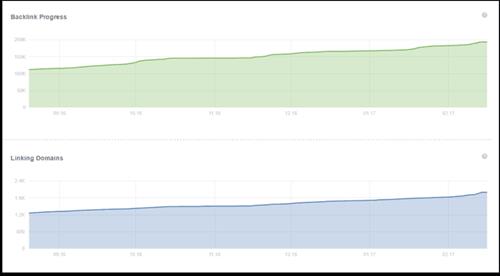
The line chart shows a steady increase in backlinking and linking domains
However, if you suddenly notice a big spike or a drop and you have not worked on link building, that would raise some red flags:
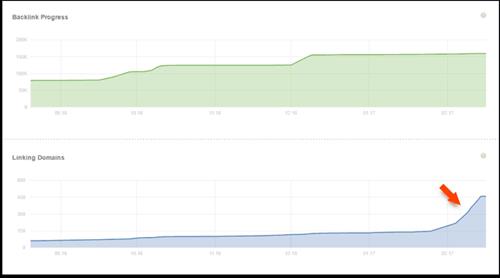
The line chart shows a spike in the backlink process and the associated domains will raise some red flags
This is exactly what happened to Robert Neu, founder of WP Bacon, a WordPress podcast site. In 2014, he was a victim of affiliate farm spam, which provided him with thousands of links to pornographic movies in anchor text.
Fortunately, Neu was able to recover the rankings and the traffic lost due to the attack in relatively short time. Although there is a lot of spam damage, he can still send a file that refuses to list the attack domain.
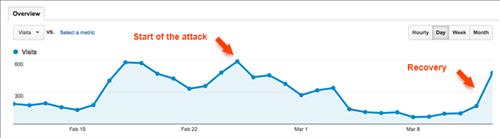
The line chart shows the beginning of the negative attack and recovery phase on WP Bacon
Your link may also be affected if you are hacked. Perhaps the attacker changed your content to include spam links or modified your links to redirect to them. These attacks are crafty and can be difficult to detect, and the only way to protect your site is to perform regular site audits.
It is important that you monitor your link profile development carefully so you can catch an attack before it takes too much effort. Use affiliate audit software or perform manual audits to check your backlink health. If you are a victim of link farm spam, let Google know and disavow links as soon as possible.
Do not make yourself a victim of negative SEO strategies
Make sure you do not hurt your website rankings by using techniques that are not acceptable to Google. Here are some things you should not do:
- Failure to link to penalized sites.
- Do not buy links from blog networks and do not buy links all because of SEO.
- Or don’t publish a large number of low-quality guest posts.
- Do not build too many backlinks to your site using keywords that make money. At least 60% of anchor text should use your website name.
- And do not lead links on your site to other sites without using the nofollow attribute.
Here’s how to identify bad links you can refer to
How to identify spam links, unnatural links to disavow links?
Some criteria to identify unnatural links:
- the browser website it is not safe
- the website on which there is an associated matrix
- poor content websites, thin content content is not user-oriented
- banned websites such as football betting, web sex, porn
- low DA sites that trust content that is completely unrelated to your site.
- domains generated automatically, without meaning
- from hundreds of websites ranking websites in the world such as
o globetv.us
theglobe.fr
theglobe.no
theglobe.vg
theglobe.se
theglobe.jp
theglobe.us
theglobe.me
theglobe.nu
theglobe.kz
theglobe.cx
theglobe.fi
Step 1: Use unnatural link filtering tools
a. Ahrefs
- Filtering links decreases by the number of links for the list of domain links to get domains with> 100 links
- Consider links that have a DR rating lower than 10
- Filter the number of domain links by Anchor text, the number of suspicious backlinks to the list to view details identifying bad links
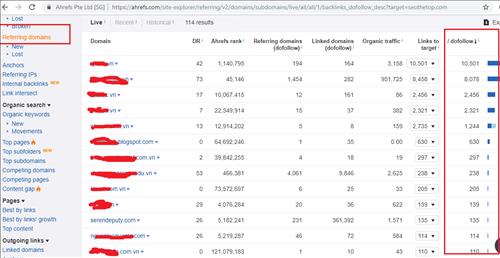
Ahrefs> Referring domain> dofollow (order number of follow decreases)
Or you can filter by DR parameter from low to high to identify low index domains
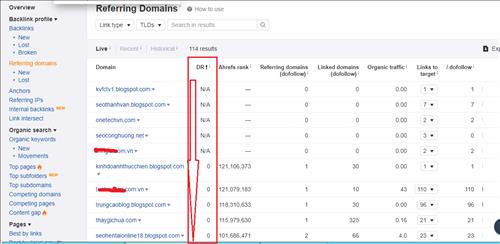 b. Moz
Filter domain links and sort by Spam score decreasing, get a list of domain links with spam score> 40 to consider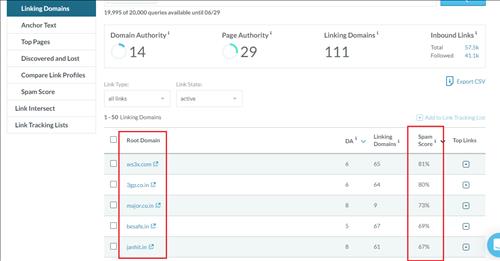 Step 3: Google Search Console
- Domain statistics have a decreasing number of links, filtering backlinks over 100 links pointing back, determining if they are sitewide types?
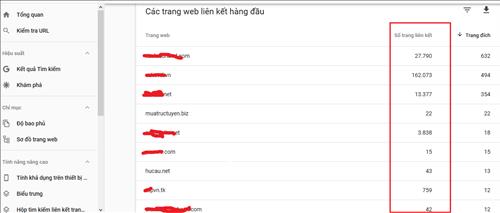
Having a list of suspicious domains and links, you should directly access the link to determine if it is a natural link or not, below are links that you should block.
Step 2: Create the file to reject the link
- After you filter out unnatural domain links, copy the bad links to the file to disavow
- Include the list of domains to be rejected in disavow_link_yourdomain_ddmmyy.txt file
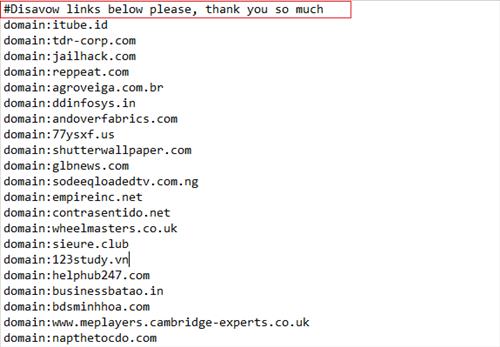
Please note that this content you submit to Google should review the work you have done hard to remove bad links and request to review and refuse to receive these links.
Step 3: Send bad links via Google’s Disavow Links tool
Visit the link: https://www.google.com/webmasters/tools/disavow-links-main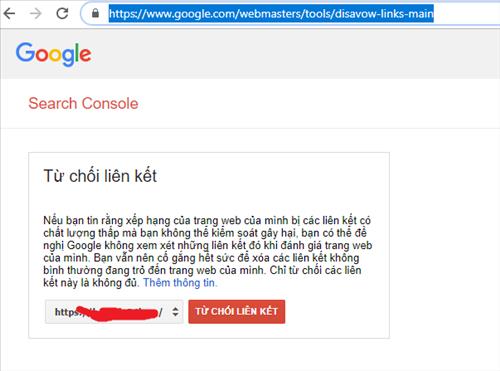
- Choose your domain and click on Deny link
- A new form will appear. Click on the file to send
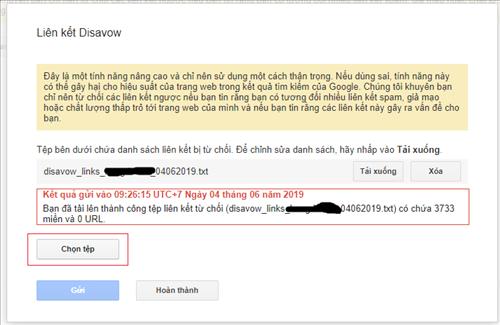
Finally click on the “Finish” button
After sending Disavow links, Google will send an email notification, and you wait patiently for a while, usually 1 to 2 weeks, you will see results by checking:
- Does Traffic see growth or recovery?
- The previous list of keywords that have been down now regains rank
- If your site receives the “Unnatural Link” penalty and attempts to fix the refusal of spam links that Google suspects will remove the penalty for you, otherwise you need more time and really need more effort.
Above is the sharing of practical experience of Ad when removing websites with unnatural link penalties. If you encounter and are somewhat not very clear about the provided information, please leave information so I can check with the case. specific to your site.
Track your website speed
Site speed is an important ranking factor. If your site becomes sluggish and you do not know why you should use data collection software to search for anything suspicious.
If you can’t find anything and still have a problem, you may be a victim of the powerful Crawl. Strong crawl causes heavy server load, which means your site will slow down and may even crash.
If you think you are the victim of a crawl attack, you should contact your hosting company or webmaster to try and determine where the download is coming from. If you are technologically savvy, you can also try to find the culprit on your own.
Search for scraped content
Content marketing is the name of the game for the past few years, but not everyone is equally creative when it comes to content creation. Therefore, shaving has become too frequent.
Scraping is the process of taking content from your website and copying it verbatim to other websites. Usually, an attacker will claim it is their own in an attempt to enhance their thin content, but sometimes they will combine it with a link farm attack to spam your site.
Scraping has serious consequences. If the content to be copied is indexed before your content, your site may lose value and your site will be ranked as a result.
So, use a tool like Copyscape to discover if someone stole your content. If they have, ask the webmaster to remove your content. If they decline (or do not respond), report them by filling out the Google Copyright Removal form.
Follow Google My Business
You work hard to build your brand reputation and get customers. Negative reviews hurt, but you often use them as learning experiences on how to improve. But what about a negative review wave?
Unless you have done a major public PR scam recently, a bunch of negative reviews could be an indication that someone is trying to flood your site with fake reviews. If you do not act quickly, these can seriously damage your reputation.
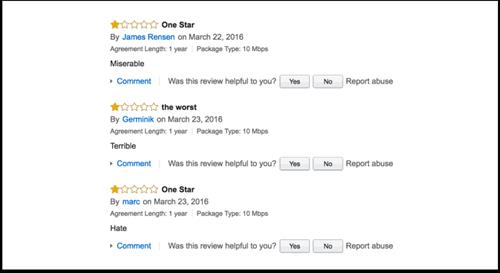
Flooded with fake reviews about your site
Keep track of your Google My Business listings and online reputation with social media listening software.
Here is how you flag and report fake reviews:
- Search for your business on Google Maps.
- Choose your business from the search results.
- Click Review summary> #Reviews in the left panel.
- Highlight fake reviews.
- Fill out the report form.
View the CTR of your keywords
At the end of 2014, Bartosz Goralewicz experienced something strange – the client’s site that received thousands of hits would appear on the page and then immediately exit. This is starting to affect their rankings – user experience is an important signal and this looks like a bad UX.
What actually happened was that someone programmed the bot to target certain keywords, visited competitors’ websites and then returned them, which created a false bounce rate in the SERP.
This cunning attack is hard to spot if you do not track the keyword’s CTR. Log in to Google Search Console, click Search Traffic> Search Analytics, and see your CTR on all keywords. Then, if you notice a large increase for no reason, contact Google and start rejecting the offending link.
Check your SERP rankings
Occasionally you may not need to check your SERP rankings, but just in case, here is a compelling reason why you should: The drop-in rankings may be the result of malicious intent. Thankfully, indexing entirely due to hacking does not happen often, but I have heard scary stories about shady SEOs that changed old robots.txt files from old customers to say Disallow: / after they give.
It is hard to imagine the full consequences of indexing your site, but fortunately, Moz bit the bullet in late 2014 so we do not have to wonder. They used Google’s URL removal tool to remove Followerwonk from the web and within 2 to 3 hours, all Followerwonk URLs were actually gone from Google’s SERPs.
Of course, now that Penguin is refreshed in real time, changes can happen much faster. That is good news if you are trying to recover from an attack, but it also means that unnoticed victims can be expensive – and quick.
For a complete overview of your site’s performance, use ranking tracking software to track your visibility. If you notice a sudden drop, check your site’s crawl statistics in Google Search Console and make sure your robot.txt is still set up correctly.
Upgrade your security
Negative SEO may not be all that common, but cyber attacks are increasing every year. So, making sure your software is up to date, you apply all security patches to your software, and your CMS software is equipped with strong encryption to protect your users.
You should also migrate your site to HTTPS, especially if you are in e-commerce or other sensitive customer data storage. HTTPS encryption not only gives you higher security but also a ranking signal and it can improve your SEO in general.
Cyber attacks are not technically negative SEO, but they will have an impact on your SEO. Google flagged compromised sites with one that could be hacked straight into your search listings, which would certainly alert traffic.
Conclusion
Negative SEO is rare. Most of the time, Google is good at capturing problematic link behaviors and cutting them down before it has an impact on your SERPs. That said, smart people are constantly trying to find ways to play system games.
My advice: Get some tips from Google Webmaster Trends Analyst John Mueller:
We work very hard to ensure that such third-party effects do not play a role in search results. That is something we cannot fully guarantee that we will always do right. So, if you are seeing something like this, you are welcome to let us know about that.
If you think you have been a victim of negative SEO, do what you can to isolate the problem and then let Google know. Meanwhile, your best way is to monitor your site performance carefully and catch the issues before they escalate.
Bizzvn, Reference Source: SEJ